Concert Review: Blackstarkids at recordBar

Original image by There Stands the Glass.

I’ve been in a funk since returning to Kansas City following a brief residency in Portland.  The malaise has been particularly frustrating because I’m not experiencing an immediate crisis.  A sweaty encounter with a buoyant pop band may have cured what ails me at recordBar on Monday, September 26.

Bouncing to the giddy ditties of Blackstarkids felt liberating, but an incident directly related to the Kansas City trio is the root cause of a portion of my emotional impairment.  I met with Deiondre, Gabe and Ty at a coffee shop in March of 2020 to verify their willingness to participate in a radio feature.

I was elated.  The profile about the then-unknown band almost certainly would have been my best work for an NPR affiliate.  Yet when I attempted to book studio time, I was informed the nascent pandemic forced the cessation of all such activity.  I have yet to recover from the setback.

In spite of my involuntary betrayal, Deiondre told me last night that my enthusiastic confidence in his band’s prospects bolstered it in an uncertain moment.  Ostensibly rejected by hometown record labels, Blackstarkids subsequently signed to the hit-making London based Dirty Hit consortium.  

Anticipating a sellout, I paid $15 for a ticket when the show was announced last month.  Yet the hometown celebration attracted less than 150 people. Blackstarkids displayed a dazzling stage presence developed through steady touring with more prominent acts for the small audience of friends, family and true believers.

Balancing the slaphappy frivolity of K-pop with the unsettling anxiety associated with members of the Odd Future collective, renditions of songs including “Love, Stargirl” soothed my heavy heart. Ty referred to Gabe as “the future of music” near the end of the show. Here’s hoping all three kids change the world.

Concert Review: Live Skull at recordBar

Original image by There Stands the Glass.

Three notable post-punk touring bands performed at separate venues within a half-mile radius of one another in Kansas City on Saturday, September 24.  I passed on Gwar at Grinder’s KC because I’m an adult.  I skipped Dinosaur Jr. because I’d already been pummeled by the band two or three times.  But I’d never previously had an opportunity to catch Live Skull.

I’ve been a fan of the New York City no-wave pioneers since buying the groundbreaking Speed Trials compilation as a new release in 1985.  About three dozen old heads paid $12 to hear the underground legends play a 60-minute headlining set at recordBar.  Forty years after its inception, Live Skull still sounds all wrong in all the right ways.

Live Skull was ahead of its time. Not surprisingly, dust hasn’t accumulated on its jagged blend of reverse funk and discriminating noise. The enhanced musical proficiency that comes with age hasn’t diminished the band’s visceral impact. The tense interplay among the current lineup causes Live Skull to seem every bit as dangerous as it did in the 1980s.

Book Review: Dvořák’s Prophecy and the Vexed Fate of Black Classical Music, by Joseph Horowitz

Original image by There Stands the Glass.

I almost dismissed Dvořák’s Prophecy and the Vexed Fate of Black Classical Music after taking a cursory glance at the index.  How could author Joseph Horowitz properly address the subject without referencing Ornette Coleman, Miles Davis or Wynton Marsalis?  I’m glad I overcame my initial aversion.  

Horowitz, a refreshingly combative scholar of classical music, inhabits an entirely different world from my own.  I learned a great deal from his new study inspired by Antonín Dvořák’s faulty prediction that the music developed by Black Americans would become the basis for the country’s classical music.

But was Dvořák wrong?  I’m inclined to believe that jazz is the true classical music of North America.  Horowitz doesn’t entertain the premise, but he’s not averse to jazz.  He repeatedly mocks traditionalists who feared a “jazz threat.”  Instead, he traces the evolution of European classical music in the new world.  Often straying from his theme, Horowitz’s disparate ramblings are consistently interesting.

A passionate champion of Charles Ives, Horowitz introduced me to the startling Concord Sonata.  For that alone, I’m in his debt.  He also has a curious obsession with the role of critics.  Horowitz clearly relishes dismantling the reputation of the Kansas City native Virgil Thomson.

Depictions of the “racial minefield” related to analyses of “Porgy and Bess” are valuable, as is an assertion that the Metropolitan Opera is responsible for diminishing opera from a popular form of music among Americans into “an aloof, elitist playground for the very rich.”  And I enjoyed learning about the intercine rivalries among American composers.

These themes are amplified in a series of illustrative videos.  A portion of my enthusiasm for Dvořák’s Prophecy is likely due to recency bias.  I just took in the PBS broadcast of “Black Lucy and the Bard,” a compelling ballet by Caroline Randall Williams and the accomplished polymath Rhiannon Giddens.  

Samanthe Ege’s piano recital astounded me four months ago. Horowitz shares Ege’s enthusiasm for the neglected composer Florence Price. And in ten days I’ll attend a concert overseen by Terence Blanchard, the composer of the 2019 opera “Fire Shut Up in My Bones”. Dvořák’s prophecy might yet be fulfilled.

Album Review: Miles Davis- That’s What Happened 1982-1985: The Bootleg Series, Vol. 7

I purchased Miles Davis’ Decoy as a new release in 1984. In my world- then as now- all genres are on equal footing. Decoy had to compete for my attention with Prince’s Purple Rain, Run-D.M.C.’s self-titled debut and Talking Heads’ Stop Making Sense. Decoy held its own. My bond with Davis’ unfairly maligned 1980s work is indelible. Consequently, the new 211-minute set That’s What Happened 1982-1985: The Bootleg Series, Vol. 7 resembles musical manna from heaven. The essential outtakes and live recordings aren’t merely further affirmation of the icon’s genius. Davis’ forty-year-old discards are more vital than a disheartening share of the jazz being made today.

Concert Review: Billy Cobham at Dolores Winningstad Theatre

Original image by There Stands the Glass.

I paid $45 for the best seat in a spectacular venue on Thursday, September 15.  The sound field for a band led by an iconic innovator was perfect.  I anticipated a fiery volcano. Instead, I heard the sonic equivalent of a scented candle.

The funk-free 90-minute performance by the jazz fusion titan Billy Cobham’s Crosswinds Project wasn’t what I had in mind.  The drummer’s best work from the 1970s is dangerous and exhilarating.  Thursday’s outing was safe and ordinary.

Cobham, 78, is still an athletic presence.  Yet along with guitarist Mark Whitfield, keyboardist Scott Tibbs and bassist Tim Landers, he played with a clinical precision intended to please the gearheads and technicians in the audience of about 300. 

Concert Review: Gorillaz at the Moda Center

Original image by There Stands the Glass.

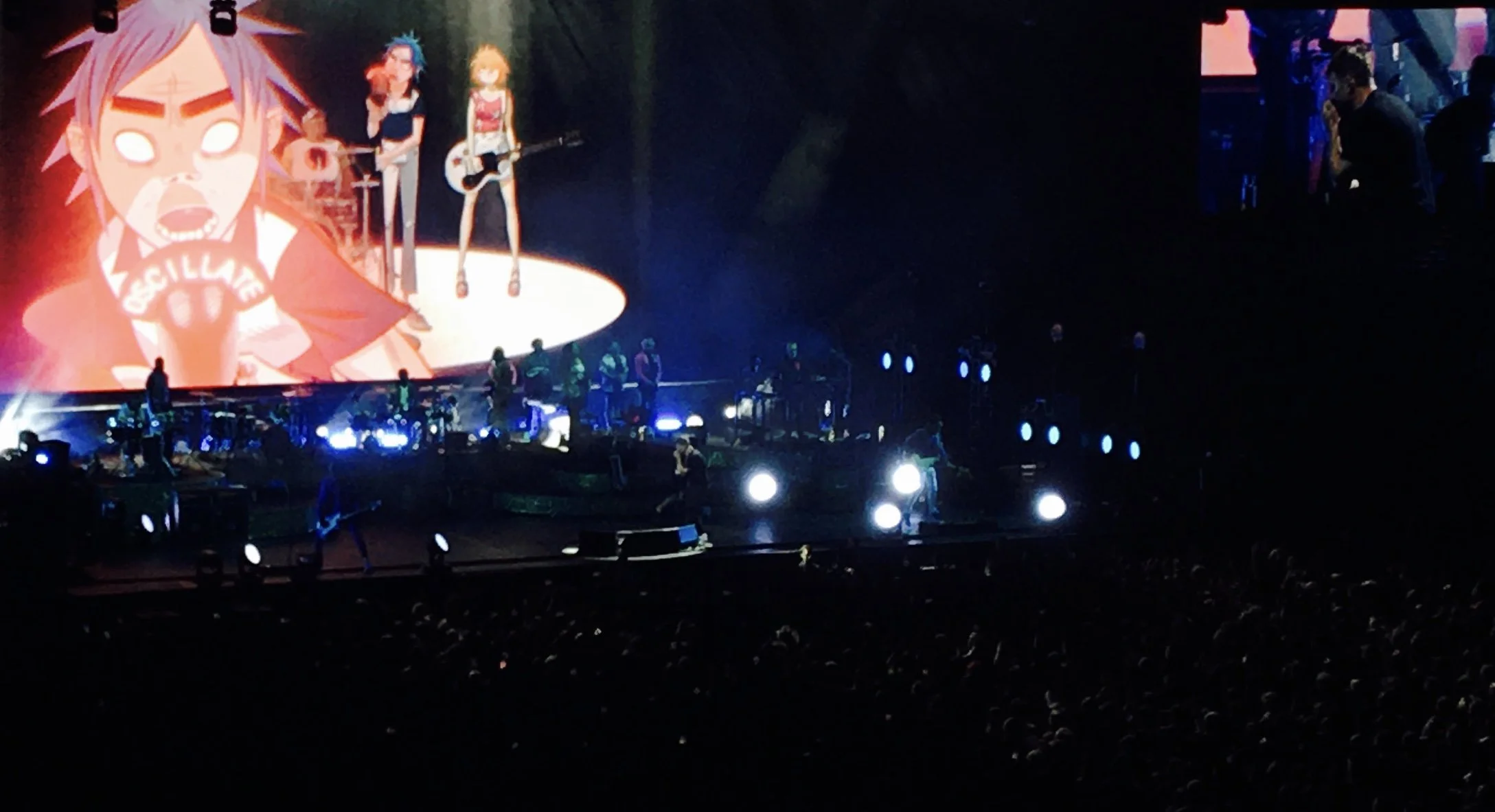
Let’s get the most embarrassing bit out of the way at the top: this grown man paid $50 to attend a concert by a cartoon band on Wednesday, September 14.  But Gorillaz isn’t necessarily for the children.  In fact, the fabricated project is one of the best pop acts of the new millennium.

Having never witnessed a Gorillaz performance, I’d long been curious about the presentation.  Live footage of 12 flesh-and-blood musicians were projected on a pair of monitors on either side of a giant screen showing Gorillaz-themed animation at the Moda Center.

The amiable Gorillaz mastermind Damon Albarn interacted with his band and with virtual appearances by artists including Little Dragon, Slowthai and Thundercat.  Unfortunately, the in-person guest artists including Bootie Brown of the Pharcyde  and opening band EarthGang relied on tired clichés.

Enormously entertained but emotionally unmoved, I felt as if I were watching psychedelic variations of Tom and Jerry cartoons from a gargantuan couch with room for 14,000 people.  Members of the vast throng didn’t share my lackluster reaction.

Dressed as if a Hot Topic delivery truck had exploded inside the home court of the Portland Trail Blazers, fans with green hair wearing baggy pants and an inexplicable number of Korn t-shirts experienced a profound form of musical engagement that eluded me.

Album Review: Ohma- Between All Things

A phrase in a press release for Between All Things suggests Ohma’s hypnotic album is “jazz-influenced instrumental music that is not jazz.” I realize I’m outing myself, but the nebulous category has been my sweet spot for a couple years. The majority of recent straight-ahead jazz albums strike me as frustratingly stodgy or hopelessly corny. (There are notable exceptions.) Between All Things is something else entirely. A blend of lo-fi Pocket Operator-style beats, low-stakes smooth jazz and hazy psychedelia, Between All Things is a mesmerizing compendium of groovy sounds.

Concert Review: Lucibela at Old Church Concert Hall

Original image by There Stands the Glass.

I’m accustomed to unsettling disconnects between artistic merit and the popularity of musicians.  Yet as I listened to Lucibela from a front row pew at Old Church Concert Hall on Thursday, September 8, I couldn’t think of a single person who wouldn’t love what I was witnessing.

Yet less than 100 people purchased $30 tickets to hear the Cape Verdean vocalist and her four-piece band in Portland.  Lucibela sings in Portuguese, but the language barrier is surmounted by her lustrous voice.  Her remarkable instrument and winning persona invite comparison to Adele.

Performing coladeiras, mornas and boleros, Lucibela was enchanting.  Members of the small audience sighed during the impossibly romantic ballads, swayed to the intoxicating uptempo numbers and gave thanks for being in the presence of an undiscovered star.

Album Review: Eric Vloeimans and Will Holshouser- Two for the Road

I didn’t wake up one day suddenly longing to hear a trumpet and accordion duo, but now that Two for the Road is in my life, the new album by Eric Vloeimans and Will Holshouser seems essential. The Dutch trumpeter and American accordionist shift between Nordic jazz, beer hall melodies and Appalachian twang with sleek ingenuity. The pairing may be unusual, but Two for the Road isn’t a novelty. An elegant earthiness makes “Deep Gap” the most immediate track. “Redbud Winter” blends highbrow classical conceptions with European folk traditions. Even a cover of “Rainbow Connection” isn’t cloying. Simultaneously cerebral and fun, the duo’s music has unexpectedly become my default soundtrack.

Concert Review: Roger Waters at T-Mobile Center

Original image of Roger Waters concert by There Stands the Glass.

I’d never been to a Pink Floyd or Roger Waters concert prior to Saturday, September 3.  There’s a perfectly good reason for my neglect: I never acquired a taste for the musicians’ post-Syd Barrett form of grandiose art-rock.

Yet the combination of Waters’ age- he was three days shy of 79 on Saturday- and a bargain price of $22 for seats in the upper rafters of the T-Mobile Center- compelled me to give in.  I spent portions of the night wishing I wasn’t there.

Not even the crystal-clear contributions of jazz saxophonist Seamus Blake and drummer-to-the-stars Joey Waronker in the immaculate sound field could alter my assessments of songs from Dark Side of the Moon and The Wall I’ve always disliked.

Much of the audience of about 10,000 consisted of the same people who attend home games of the Kansas City Chiefs.  But marijuana smoke rather than beer vendors filled the aisles. And instead of football, fans took in a torrent of Bernie Bro screeds.

The laundry list of demands and grievances displayed on the massive video array quickly became tiresome.  I may agree with sentiments including “Yemeni rights” and “free Julian Assange,” but relentless hectoring is always a drag.  Yet Waters had the last laugh.

Presumably inspired by Saturday’s rendition of "Us and Them", I dreamed I lived in a gated compound in a war-torn country later that night.  As insurgents were about to break down the door of my home, I contemplated how much I’d miss air conditioning.