music

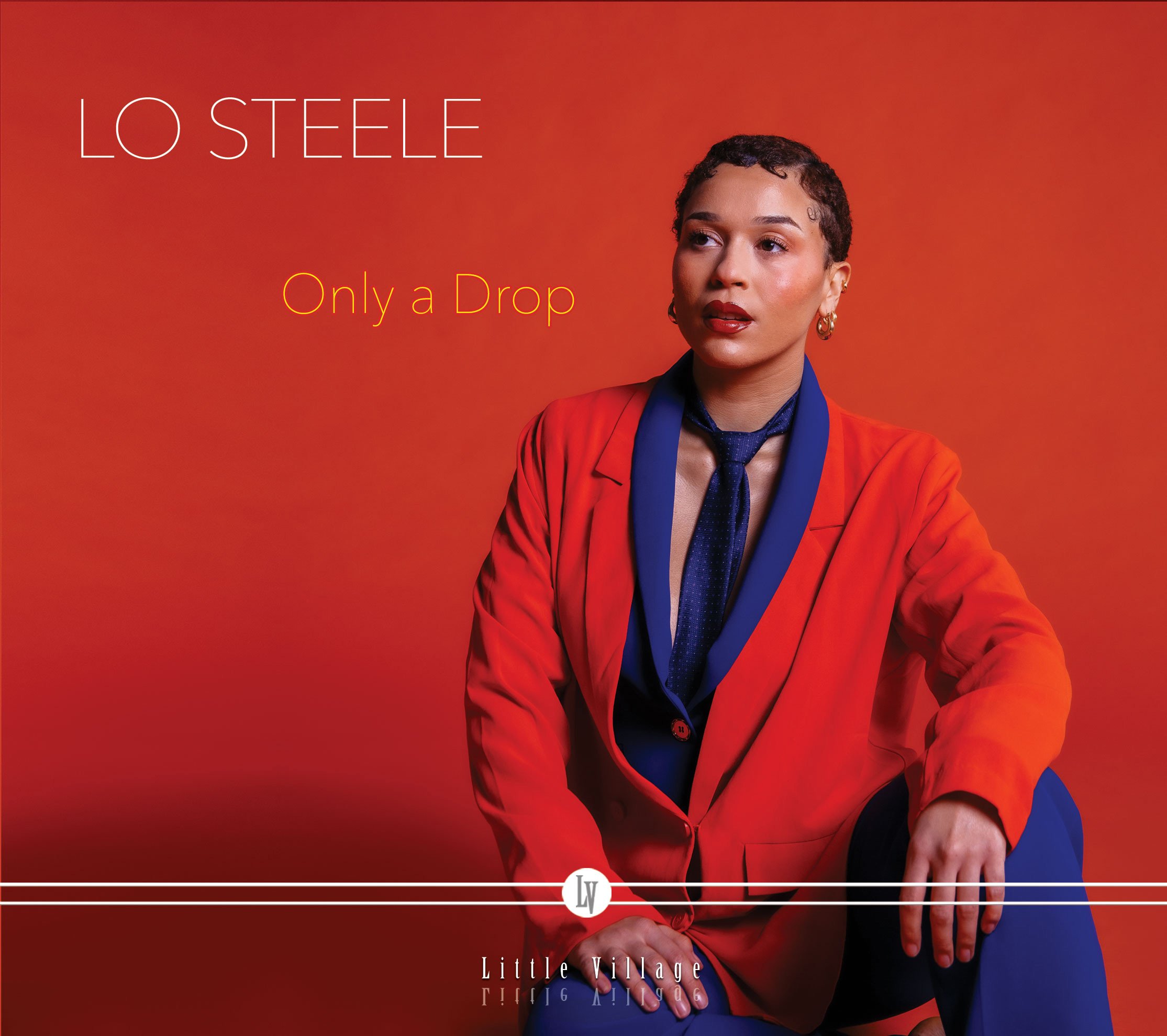
Album Review: Lo Steele- Only a Drop

Charlie Hunter’s new album AM Clock Radio hits me like aural catnip. Slinky instrumental versions of 1982 hits like Dazz Band’s “Let It Whip,” DeBarge’s “I Like It” and Zapp’s “Doo Wa Ditty (Blow That Thing)” are absolutely irresistible for a funk and R&B fan of my age and inclinations.

Only a Drop, Lo Steele’s March release co-produced by Hunter, may be even more satisfying. I first became aware of Steele a few days after relocating to Portland a couple weeks ago. She co-headlined the Montavilla Jazz Festival, but I wasn’t able to catch her during the seven hours I spent at the event.

I was present, however, when Steele sat in with Alden Hellmuth at the 1905 for a charming rendition of “Save Your Love for Me” on September 10. I discovered Only a Drop later that evening.

As the hundreds of thousands of people obsessed with D’Angelo’s Voodoo know, Hunter played a key role in shaping the feel of the landmark 2000 album. Only a Drop is a mellower, gospel-infused descendent of Voodoo. Portland should be proud.
Album Review: Sullivan Fortner- Leave That In There

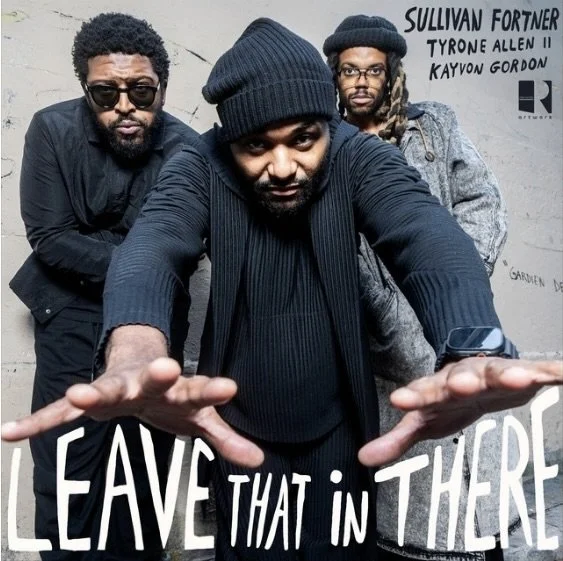
Something was missing each of the several times I’ve attended a performance by Sullivan Fortner. The pianist was never less than masterful, but even when I sat a few feet from the pianist at Mezzrow in 2017, I got the sense that Fortner was holding back.

The promise Fortner previously bottled up is spilled on Leave That In There. Accompanied by bassist Tyrone Allen II and drummer Kayvon Gordon on the new plugged-in album, Fortner lets his freak flag fly. Even the organ jazz workouts “Swirl” and “Aria II” are trippy.

I hope Fortner isn’t in a hurry to return to conventional mainstream jazz. When he does revisit the sound that made his reputation, I’m confident the newly liberated Fortner will elect “to leave that in there.”

Concert Review: Zoh Amba and Bijoux Cone at Show Bar

Original image of Zoe Amba and band by There Stands the Glass.

A genuine rock 'n' roll high school, Revolution Hall is a former Portland public school converted into an entertainment emporium. A Taylor Swift-themed dance party was the primary attraction at the complex on Thursday, September 4. I was bemused to find myself amid hundreds of cheerful women wearing spangled dresses.

Show Bar, a small room in Revolution Hall, attracted fifty substantially grungier and gloomier people who paid $20 apiece for a show featuring Zoh Amba and Bijoux Cone. Even though Amba’s Eyes Full is one of my favorite non-jazz, non-classical albums of 2026, I passed on a chance to catch Amba open for Courtney Barnett in Kansas City last month.

I began smiling ten seconds into an explosive hour-long performance by Amba’s trio and am still on a post-show high as I write these words two days later. Amba resembled the young Rodney Crowell while the feral attack often sounded much like 1984-era Minutemen. As a bonus, Amba played a few minutes of free jazz skronk.

Cone lacked Amba’s heedless confidence. Splitting the difference between Anohni and Lou Reed, Cone’s solo outing was marred by frequent references to her phone. Still, the rousing karaoke version of Suicide’s “Surrender” closing Cone’s set provided an appropriate foretaste of Amba’s exceedingly un-Swiftian triumph.

Albums Review: Ben Goldberg's 8 x 8 Initiative

The artists associated with Kansas City’s Extemporaneous Music and Arts Society are so prolific that I occasionally struggle to keep up with their output. Ben Goldberg, a Bay Area musician with similarly freewheeling improvisational inclinations, made the collective look like a bunch of slackers by releasing eight albums on August 8.

Each features a different lineup and stylistic approach. The sole constant is Goldberg’s distinctive clarinet, a sound bearing only cursory resemblances to the tones of Benny Goodman and Ken Peplowski. The releases range from mainstream(ish) swing to avant ambience.

Guitarist Will Bernard (Optical), saxophonist John Ellis (Spillway Four), pianist Myra Melford (Trouble Trouble) and percussionist Kenny Wollesen (Dog Hypnotic) are Goldberg’s most auspicious collaborators, but most of the musicians previously unfamiliar to me are no less impressive. 

A proper explanation of Goldberg’s 8 x 8 initiative- he turned 66 on August 8- is available here. I like all eight albums, but a ranking of my preferences follows. Anyone with the audacity to question my judgement might begin with a generous sampler featuring two tracks from each of the admirable albums.

1. Ben Goldberg and Kenny Wollesen- Dog Hypnotic
2. Ben Goldberg- Spillway Four
3. Ben Goldberg-  Optical
4. Ben Goldberg- Trouble Trouble
5. Ben Goldberg- For Bobby
6. Ben Goldberg with William Winant- Dreaming Upon Waking
7. Ben Goldberg- Just What You Thought You Wanted
8. Ben Goldberg- Rock Band

Album Review: John Williams- Legacy

Orchestral music walloped me when I entered a man’s home a few years ago. I was flabbergasted that a devotee of professional football and dinner theater was blaring what initially sounded like Richard Wagner’s Der Ring des Nibelungen.

The joke was on me. Upon rushing to his entertainment center I discovered he was enjoying a John Williams score for a Star Wars flick. Until that moment I hadn’t understood how closely the prolific film composer based his sound on the works of Gustav Mahler, Richard Strauss and Wagner.

As a weirdo who rarely watches movies, the new compilation Legacy is a revelation. Much of the 78 minutes performed by the Berliner Philharmoniker, the Recording Arts Orchestra of Los Angeles and the Wiener Philharmoniker is entirely new to me.

Seemingly everyone else has long appreciated Williams’ Pops-style themes. What they lack in nuance is made up for in the pleasure they offer. I suspect Williams has composed hours of additional music that merits comparison to Wagner. For now, I’m hooked on the hits I’d missed.

Concert Review: J. Cole at the T-Mobile Center

Original image by There Stands the Glass.

I was priced out of J. Cole’s arena tour in 2024. Given the least expensive tickets for the rapper’s return to the T-Mobile Center on Wednesday, August 20, were more than $100, I reckoned I’d be shut out again. Yet a few hours before the concert I spotted a front-row aisle seat in a newly opened “obstructed view” section for an all-in price of $57. Suddenly, "I'm in the building and I'm feeling myself!"

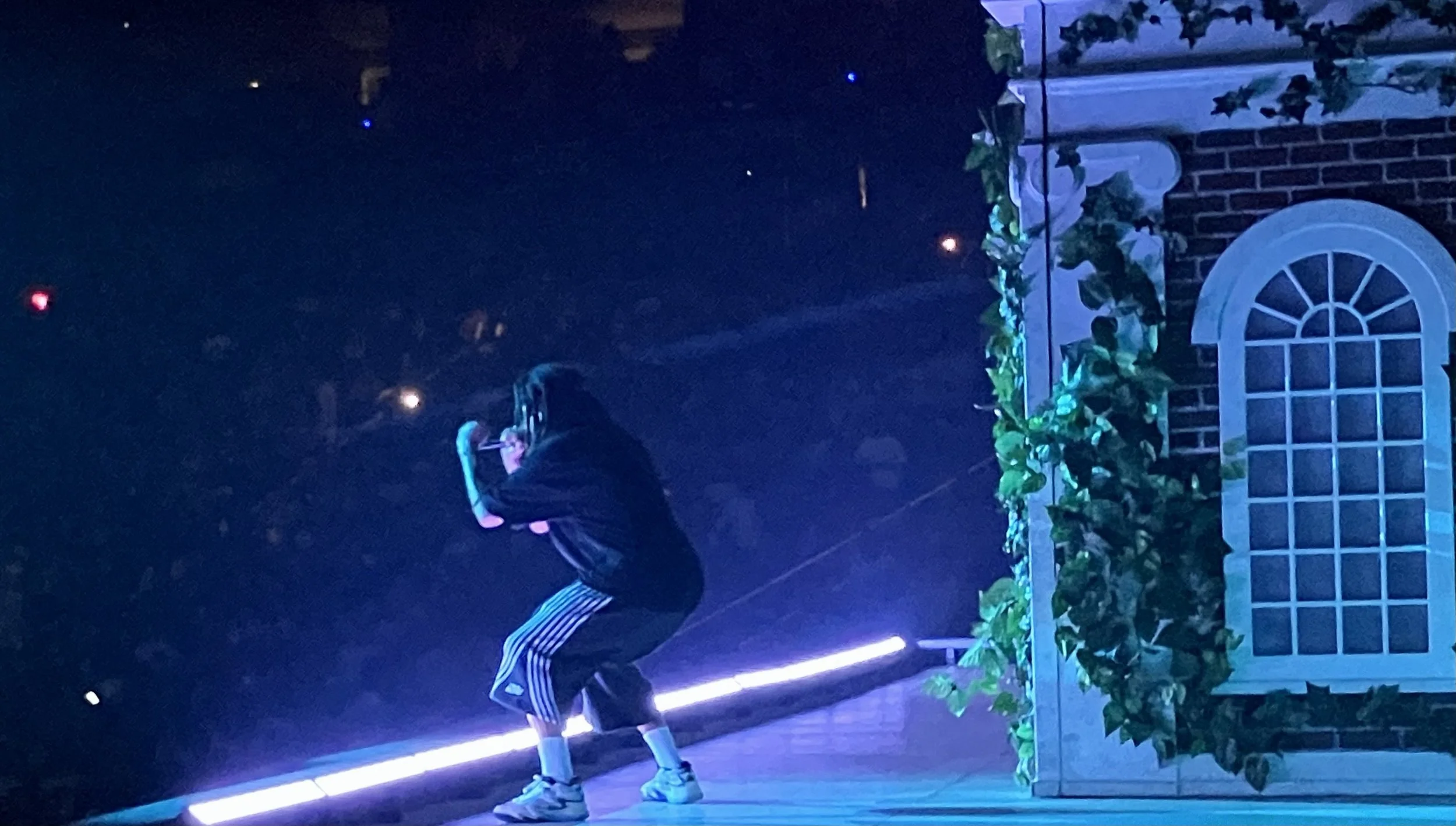
Could I see? Sometimes! I was situated thirty feet from an on-stage drink and towel stand Cole visited between songs in his two-hour performance. Could I hear Cole and his live band clearly? Not really! I was behind the banks of speakers pointed at the capacity audience of approximately 14,000. I was glad to be surrounded by women who shouted the words to most of the songs. Their cues allowed me to immediately recognize personal favorites like “Middle Child” and “A Tale of 2 Citiez.”

Many people went home raving about the child who went bar-for-bar with Cole on Benny the Butcher’s “Johnny P’s Caddy.” I can’t stop thinking about one of the night’s few glitches. Situated above the tech crew, I marveled at a spate of finger-pointing when Cole’s microphone cut out and a replacement couldn’t be quickly located. I was also surprised at the indifferent reception hometown producer Conductor Williams received during his opening set.

Cole insisted he belongs on a Mount Rushmore of rap during a lengthy manifesto early in the concert. His grind and talent are irrefutable. Yet the intrinsic corniness on full display in Kansas City locks him out of my top four. On the other hand, Cole’s everyman persona makes him unique among rap superstars. He may not be in my top four, but he’s a shoe-in for my top twelve.

Book Review: Gary Stewart: I Am From the HonkyTonks, by Jimmy McDonough

Original image by There Stands the Glass.

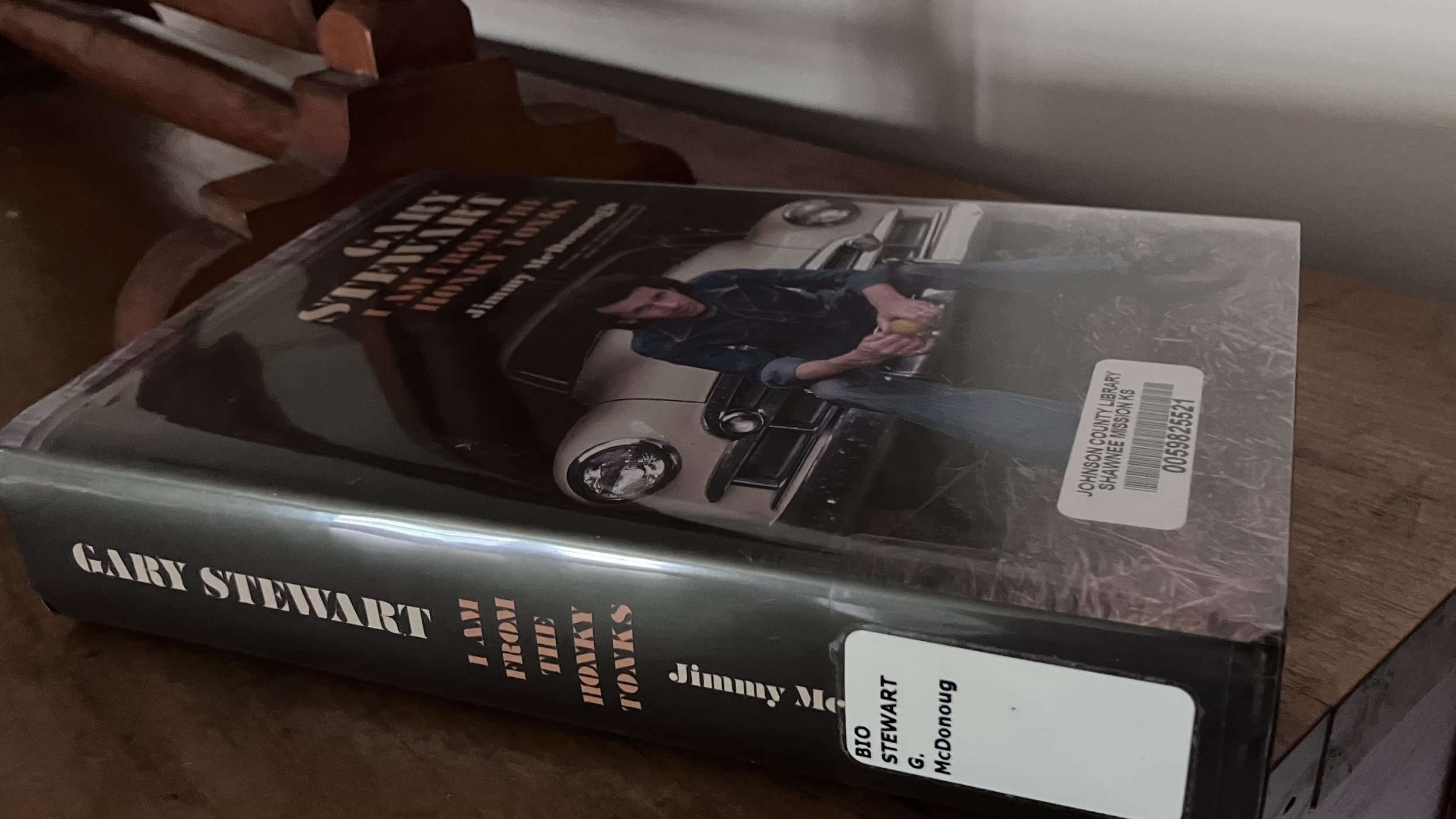
As a fourth-generation Kansan raised on Waylon and Willie, quail hunting and bass fishing, I’m probably typecast as a country boy by a lot of people. A harrowing new biography of Gary Stewart reminds me that I’m little more than a precious city slicker in spite of my Midwestern drawl and the hereditary dirt under my fingernails. 

When “Drinkin’ Thing”, "Out of Hand" and “She’s Actin’ Single (I’m Drinkin’ Doubles)” were among my family’s favorite sing-alongs in 1974, I was unable to intuit the backwoods darkness behind Stewart’s first radio hits. The ill-fated musician was a real-deal Kentucky hillbilly.

Jimmy McDonough’s gonzo-style documentation of the terrible choices, devastating losses and self–sabatoge of Stewart and his extended family goes far beyond standard Nashville chicanery. In addition to the constant backdrop of alcohol, drugs and infidelity, Gary Stewart: I Am From the Honky Tonks contains wooly tales of organized crime, chicken fighting and airplane crashes.

Stewart’s considerable intelligence and artistic talent were swamped by a chaotic rustic upbringing. Repeatedly described as childlike throughout McDonough’s 500-page doorstop, Stewart was a stereotypical genius without a lick of sense. His inability to assume autonomy over his career is maddening.

Unlike Stewart, I rarely handle guns. I’m not even sure where my shotguns are stored. And the accumulation of hard knocks I’ve suffered would merely equate to a bad week in Stewart’s abbreviated life. McDonough’s excellent work causes me to thank God I come from a line of Kansas teachers, preachers and farmers rather than coalminers in an impoverished Kentucky holler.

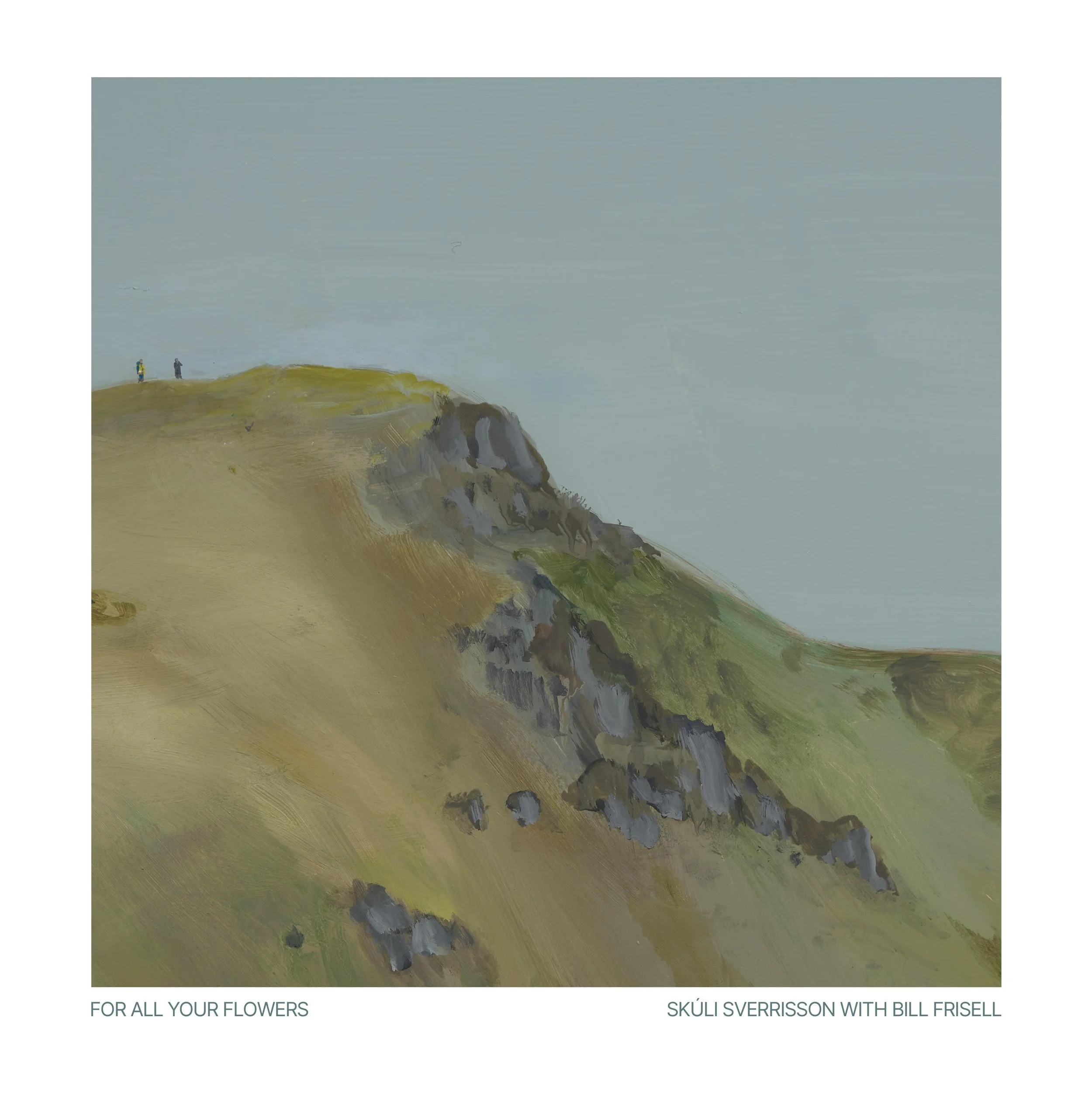
Album Review: Skúli Sverrisson and Bill Frisell- For All Your Flowers

I’m blessed to suddenly find myself spending much of my time in the company of babies. Profound reflection accompanies the obligatory cycle of overseeing sleeping, crying and diaper changes. For All Your Flowers is an ideal companion to my soul searching. Not only does the hushed tone of the new duet album by Skúli Sverrisson and Bill Frisell not wake napping infants, it stimulates mindful reflection on life’s beginnings and endings. Sentimental but not mundane, the serene 2025 recording by the Icelandic bassist and the American guitarist is a lowkey stunner.

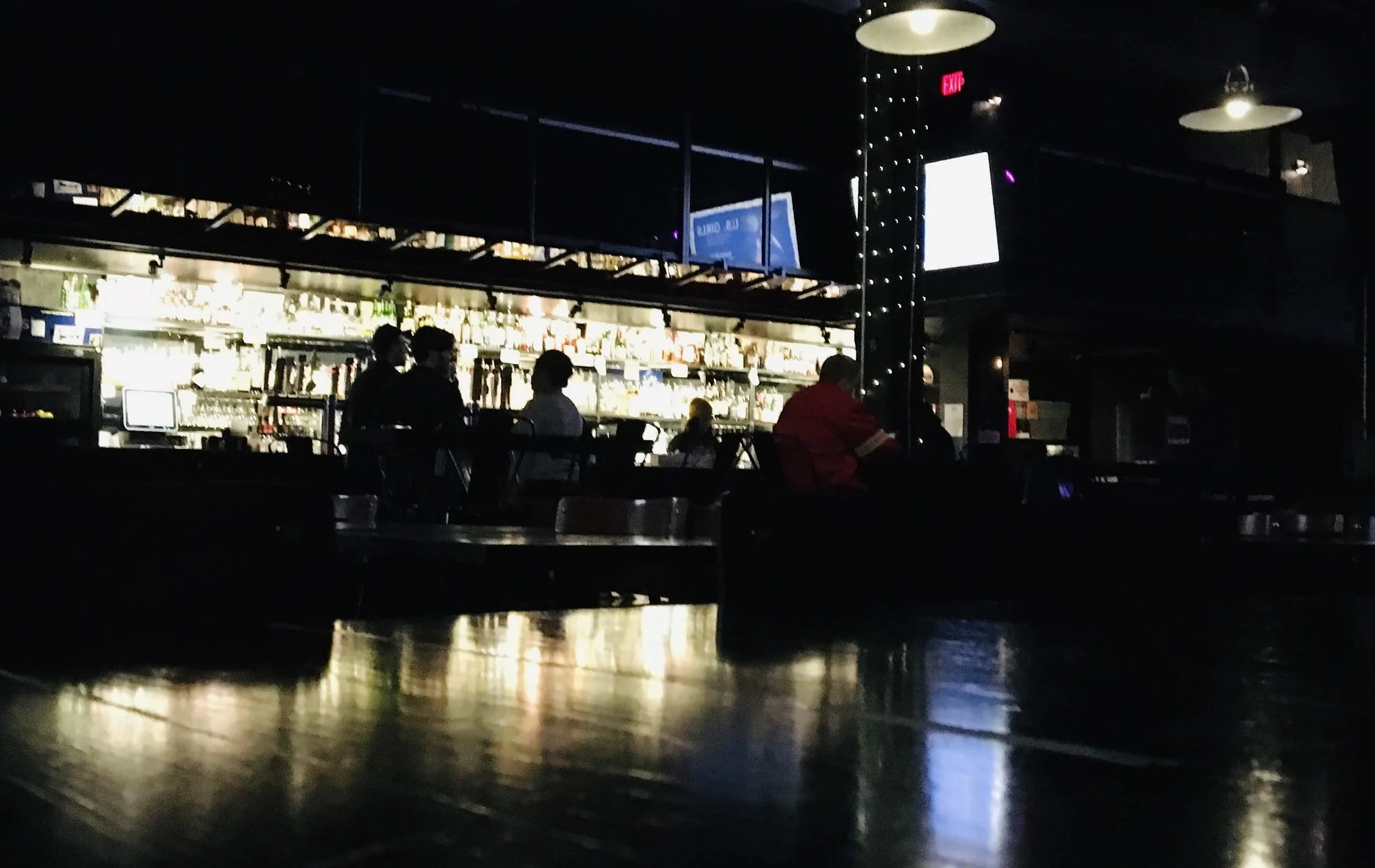
Barroom Boor

Original image by There Stands the Glass.

My regrets are infinite. Most every honest person who reaches my age shares the painful trait. I’m often reminded of a relatively minor but nevertheless unacceptable incident in my past as I attend performances in spaces ranging from barrooms to amphitheaters.

Riding high during SXSW in 1997, I met up with a few of my clients at an Amy Rigby showcase somewhere along the 6th Street corridor. My memory places the gig in a space that was more like a glorified hallway than a proper venue.

The configuration meant that most members of the audience of several dozen were within twenty feet of Rigby and her band. The intimacy was marred by my oblivious insistence on chatting up clients during the performance.

I regretfully recalled my boorish behavior the next day. The guilt I feel about the incident is undiminished nineteen years later. Every time I grow livid at rude chatter during musical performances, I’m forced to check myself before chiding the offenders.

Album Review: Shannon Lay- Past the Veil

Folk promoters, publicists and musicians regularly accuse me of willfully neglecting- or worse still, disrespecting- the form. As the selection of my 2025 Person of the Year indicates, I’m innocent of such charges.

I am guilty, however, of resolutely dismissing tired soundalikes and retro nostalgists. Only extraordinary songwriting compels me to assent to conventional folk settings. The use of unconventional staging by imaginative folk artists such as Willi Carlisle often pushes their music over the top.

Rather than indulging Mimi Fariña and Tom Rush clones, I’m drawn to innovators like Shannon Lay. Even as it references the vintage British folk-rock sounds of Sandy Denny, Nick Drake and Renaissance, elaborate production makes Lay’s new album Past the Veil seem futuristic.

The folk roots are never washed out by the psychedelic drone washes on “Whom Gods Destroy,” trip-hop bumping on “Room For Less,” fun-house ambience on “Sky Song” and cloudy pop on “I Need More Water.”  To paraphrase Woody Guthrie, these sounds are my sounds.