Champian Fulton

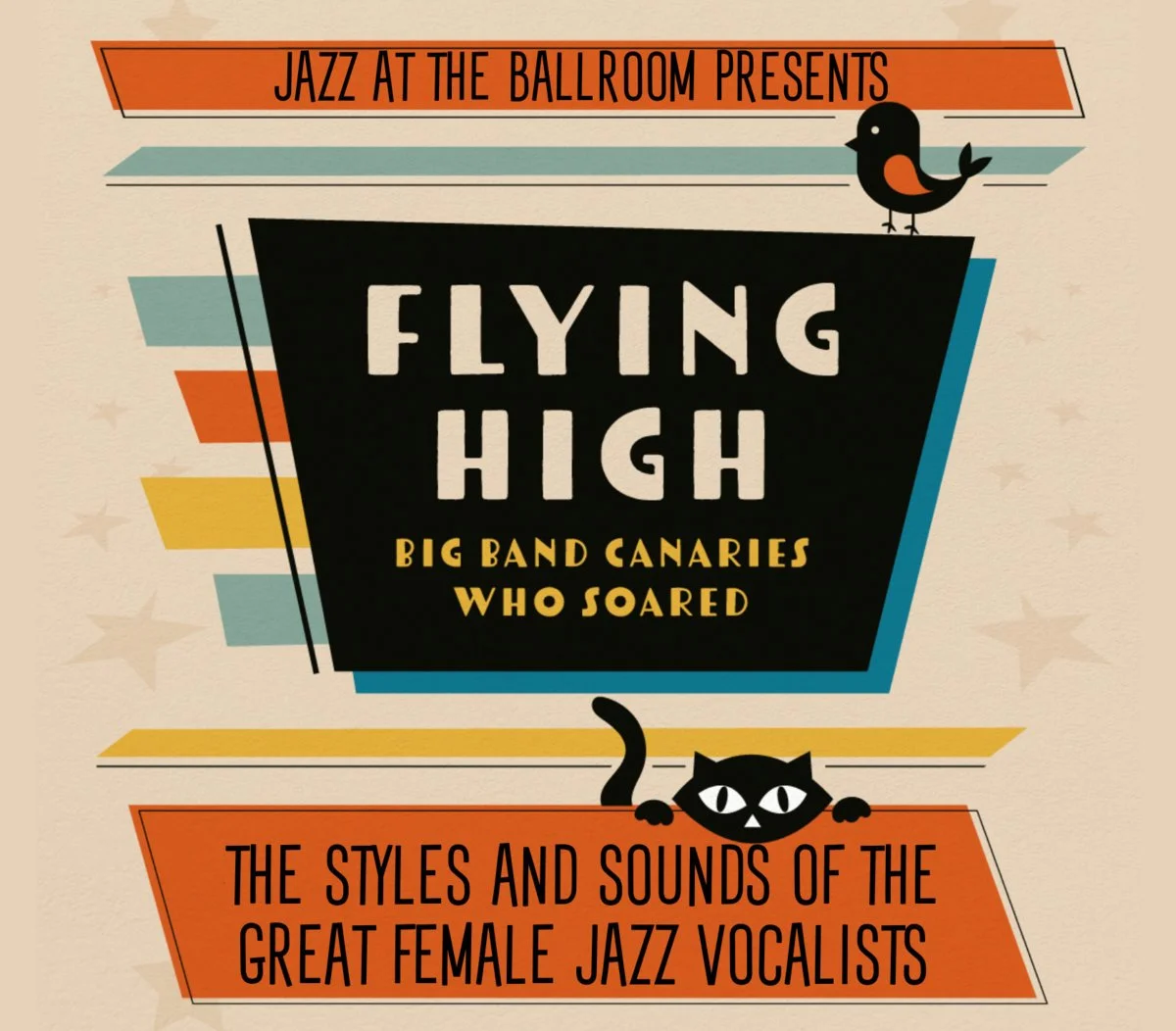
Album Review: Champian Fulton- Flying High: Still Soaring, A Tribute to the Voices That Taught the World to Swing

I anticipated losing listening time due to a glorious life event. The complete shift in my taste of music was unexpected. Even assuming I had the time, the prospect of auditioning new releases by personal favorites Bruiser Wolf, Elucid, Kim Gordon, Lamb of God and Bill Orcutt holds no appeal.

The latest from Champian Fulton, however, is precisely what works for me in this magical moment. I’ve long appreciated the Oklahoma native’s throwback jazz, but readers of Plastic Sax and There Stands the Glass know I prefer dirty, gritty and noisy forms of jazz.

Fulton shares the spotlight with notable vocalists including Carmen Bradford and Jane Monheit on Flying High: Still Soaring, A Tribute to the Voices That Taught the World to Swing. The album is free of the experimental edginess I ordinarily relish. For the time being, I want nothing but the sort of frictionless flight provided by Fulton and her friends.

Rock Me Amadeus

Screenshot of Jeremy Ovenden in the Royal Theatre of Monnaie’s production of “Lucio Silla” by There Stands the Glass.

Screenshot of Jeremy Ovenden in the Royal Theatre of Monnaie’s production of “Lucio Silla” by There Stands the Glass.

I often think about Kanye West’s 2013 concert at the Sprint Center. My review of the show for The Kansas City Star went viral because I was obliged to report the arena was only a quarter full, but it was the combination of avant-garde noise from West’s then-current Yeezus album and spectacular visuals including a mountain and ballet troupe that made the night unforgettable.

More than five months into my daily opera immersion (161 operas in the past 161 days!), a little piece of me dies every time I commit to a stale production set in a beige parlor featuring stocky vocalists in period costumes. Thanks in part to West’s spectacular imagination, I now expect the visual component to be as compelling as the music it accentuates at large-scale live performances and in every video production. Thrilling versions of two Wolfgang Amadeus Mozart operas I recently watched attest to the power of unfettered creativity in a form long associated with stasis.

“Lucio Silla,” an examination of a tyrant’s abuse of power, is considered one of Mozart’s least essential operas. Yet an arresting 2017 production mounted by the Royal Theatre of Monnaie forces me to revise my expectations of opera’s possibilities. Without compromising the music of the 250-year-old drama, the Belgian company places the work in a dystopian version of the present. The depictions of bloodlust and sexual violence are so graphic I repeatedly had to turn away. I suspect Mozart would approve of the unflinchingly kinky staging.

But why be constrained by a stage at all? Kenneth Branagh’s delightful cinematic version of “The Magic Flute” (“Die Zauberflöte”) successfully adopts the topsy-turvy tone I associate with the direction of Terry Gilliam. The fanciful 2006 reworking set amid trench warfare in World War I includes an excellent English libretto by Stephen Fry. Aside from scenes of battlefield horror, attempted rape and thwarted suicide, the film is suitable for children. My primary objection concerns Branagh’s suppression of the opera’s Illuminati subplot.

The scarcity of operatic innovations such as these might be part of a global conspiracy. I’m currently working my way through Glyndebourne’s four-hour and 44-minute stream of “Die Meistersinger von Nürnberg.” The stale 2011 production is set in a beige parlor and features stocky vocalists in period costumes. Music criticism is among the themes of Richard Wagner’s opera. In spite of the fusty visuals, I intend to give it a 8.7 rating.


---
I observe the centennial of the birth of Charlie Parker by reviewing Champian Fulton’s Birdsong and Pasquale Grasso’s Solo Bird at Plastic Sax.